
Israeli Prime Minister Benjamin Netanyahu has asserted that Iran is no longer capable of enriching uranium or producing ballistic missiles, following a joint military campaign with the US.

The IRGC accused US and Israeli forces of using civilians as 'human shields' and warned of continued attacks.

'Iran cannot trust the USA because it considers the USA to be Israel-controlled. And no, the IRGC is not going to accept anything else but major US concessions.'
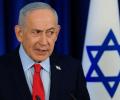
Benjamin Netanyahu declares that the joint Israel-US campaign is successfully 'crushing' Iran, eliminating existential threats and weakening the regime's regional influence.

One of the most uncivilised characteristics of this war has been the total disregard for international law and the laws of armed conflict, asserts Vice Admiral Biswajit Dasgupta (retd).

As many as 35 vessels, including cargo carriers and oil tankers, successfully navigated through the strategic maritime chokepoint of the Strait of Hormuz over the last 24 hours, according to Iran's state media reports citing a formal declaration by the Islamic Revolutionary Guard Corps (IRGC) Navy.

Israeli Prime Minister Benjamin Netanyahu has warned that recent missile attacks demonstrate Iran's capacity to strike globally, posing a threat to Europe and the rest of the world. He highlighted the need for international action to counter Iran's nuclear and missile programmes.

US Secretary of State Marco Rubio stated that significant progress has been made in negotiations with Iran to reopen the Strait of Hormuz, a critical global shipping lane. However, President Donald Trump remains cautious, vowing not to accept a 'bad deal' regarding Iran's nuclear programme and regional stability.

Israel will continue its offensive in South Lebanon aimed at neutralising the threat from Hezbollah, which is backed by Iran.

Joe Kent, former head of the National Counterterrorism Center, accuses Israel of instigating the conflict between the United States and Iran, claiming there was no imminent threat from Iran.

Facing escalating threats from the US, Iran is mobilizing its citizens to form 'human chains' around power plants as a defensive measure against potential airstrikes, raising concerns about international law and civilian safety.

This threat comes as the assembly of experts in Iran has reportedly reached a majority consensus regarding the successor to the late Supreme Leader Ayatollah Ali Khamenei, according to the Tehran-based Mehr News Agency (MNA).

The Israeli military said the strike dismantled the bunker during ongoing operations against Iranian military infrastructure.

The clock on the ceasefire is running out. But everyone's already whispering about round two, possibly as soon as this weekend.

The intriguing bit is that Trump is likely to attend the talks in Islamabad this weekend -- if he does, it will be the clearest signal yet that the US is ready to exit the war with some sort of win to show, since he cannot afford to go for the talks and return empty-handed, notes Prem Panicker in his must read blog on the Iran War

Iran's Islamic Revolution Guards Corps (IRGC) has issued a chilling ultimatum to 18 major American corporations, warning that their regional infrastructure will be targeted following allegations of their involvement in hostile operations.

The Israel Defence Forces (IDF) confirmed the missile launches in a statement on Telegram, noting that defensive systems were actively operating to intercept the threat.

The BRICS foreign ministers' meeting in New Delhi concluded without a joint statement due to disagreements over the West Asia conflict, with Iran blaming the UAE for the lack of consensus. India, as the host, issued a chair's statement highlighting the differing views.

Israeli Prime Minister Benjamin Netanyahu has threatened to continue targeting Iranian leaders, claiming recent successes in eliminating key figures. He asserted that Israel, with US support, aims to undermine the Iranian regime and empower the Iranian people.

A joint attack by the United States and Israel on Iran has triggered a massive military confrontation in the Middle-East.

Prime Minister Benjamin Netanyahu stated that Israel and the US struck Iran because Tehran had restarted its nuclear programme and it would have gone 'immune within months'. He claimed Iran was building new underground sites to shield its missile and nuclear programmes from attacks.

A senior Iranian legislator has suggested that Tehran could further escalate pressure on its adversaries by targeting the Bab el-Mandeb Strait, raising concerns about global supply chain vulnerabilities.

The escalating conflict in West Asia widened on Monday as Israel launched airstrikes on Hezbollah targets in Beirut and other parts of Lebanon, following projectile fire from Lebanese territory into northern Israel. The Israeli Air Force (IAF) said in a series of posts on X that it carried out targeted strikes against senior members of Hezbollah in the Beirut area in response to the projectile fire launched toward Israel, particularly toward the north of the country.
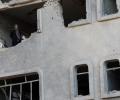
A spokesperson for the Central Khatam al-Anbiya Headquarters said that Iran's armed forces are prepared to intensify their response if aggression continues.

The threat has raised concerns about possible asymmetric attacks outside the region. Iran has also stepped up attacks on energy infrastructure in Gulf countries.

Israel's Defence Minister Israel Katz has stated that Israel is prepared to escalate military action against Iran, pending approval from the United States. This comes as US President Donald Trump says he would not use nuclear weapons in any conflict with Iran, while also claiming the US has 'total control' over the Strait of Hormuz.

Donald Trump has issued a stern warning to Iran, threatening massive retaliation if it attacks Qatar again, following reports of an Israeli strike on Iran's South Pars gas field and an attack on Qatar's LNG facilities.

Israel extends nationwide restrictions and warns citizens of potential attacks from Iran and Hezbollah, with the Home Front Command maintaining current guidelines until further assessment.

The United States has ordered the withdrawal of non-emergency staff from its consulates in Karachi and Lahore, Pakistan, citing security concerns amid regional tensions and protests.

'In such a scenario, Iran could proclaim itself victor, rebuild, re-enforce its diminished regional proxies to further destabilise neighbouring nations and take control of the Persian Gulf and Strait of Hormuz.'

Amid rising tensions, Iran reportedly launched ballistic missiles toward a US-UK military base, prompting concerns about regional stability and the potential for escalating conflict in the Middle East.
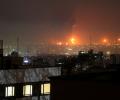
Israeli PM Benjamin Netanyahu has affirmed that the United States and his administration have achieved nearly total dominance over Iranian airspace following a series of coordinated military strikes.

'What we have yet to see on either the US or the Iranian side is willingness to compromise on their ultimate demands and the flexibility to reach an agreement to end the war.

The Israeli Air Force (IAF) said it struck several targets in Tehran, Shiraz and Ahvaz simultaneously over the past 24 hours, targeting sites linked to Iran's ballistic missile programme, air defence systems and military headquarters.
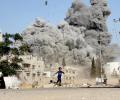
The Israeli strikes in recent weeks have affected more than one million Gazans, forcing them to vacate the area and move towards southern Gaza.

Iran's Islamic Revolutionary Guard Corps (IRGC) claims control of the Strait of Hormuz and reports striking a US destroyer, escalating tensions in the Middle East following retaliatory strikes between Iran, the US, and Israel.

'Our diplomacy should have been focused on preventing war and avoiding the inevitable disruptions it would cause, posing a real risk to India's growth story,' asserts former foreign secretary Shyam Saran.

The Israel Defence Forces (IDF) have conducted a massive military operation targeting more than 200 infrastructure sites within Iran and an additional 140 Hezbollah assets across Lebanon.

In his first major national address since hostilities began, Trump said the ongoing military campaign, dubbed 'Operation Epic Fury', has delivered 'swift, decisive, overwhelming victories'.

His remarks come after Trump warned Iran of severe consequences if it fails to reopen the strategically vital Strait of Hormuz, a key global energy transit route.
